Wednesday, 2 March 2011

Monday, 28 February 2011
I tend not to do much moth trapping in the winter, too cold, too wet you know the score, so it wasn't much of a surprise to get a new moth on Saturday morning. Despite heavy overnight rain, the trap did get 9 moths of which pale brindled beauty was new and I hadnt seen many twin-spot quakers. Role on the warn nights of summer!


Twin spot quaker and pale brindled beauty
It has been a bit too windy recently to open the nets in the garden so it was nice to catch 4 siskins on Sunday. A very 'rosey' redpoll sp managed to evade the nets which was a bit annoying.


Wednesday, 23 February 2011
Not really much going on at the moment so there hasn't been a great deal to write about. Few bits about on the reserve in the last week although the 3 red-crested pochards and drake mandarin are surely of 'unknown origin'. The quality has been left to an adult Bewick's swan that has been feeding on a sugarbeet field at the end of the carpark and roosting on the fresh marsh at night.


Loads of finches in the garden at the moment. At least 30 chaffinch and greenfinch at the weekend and there are still 4 lesser redpoll and 3 siskin today.


Loads of finches in the garden at the moment. At least 30 chaffinch and greenfinch at the weekend and there are still 4 lesser redpoll and 3 siskin today.
Sunday, 13 February 2011
Cracking but usexpected ringing session this morning. Conditions were not the best, it was windy and we always had the threat of rain. Thankfully the rain held off and we ended the morning with 52 new and 45 re-traps - very good for this time of year. Highlights had to be the large number of long-tailed tits caught. They are often around but always seem to keep clear despite running a tape to attract them. For some reason they just wanted to go in the nets today and we ended up with getting 29! Always cracking birds to handle and usually really easy to extract.
A new woodcock was a nice early bird and a couple of goldcrests added some variety.
2 lesser redpoll and 3 siskin on the feeders when I got home but it was too windy to open and nets - save them for next time!
A new woodcock was a nice early bird and a couple of goldcrests added some variety.
2 lesser redpoll and 3 siskin on the feeders when I got home but it was too windy to open and nets - save them for next time!
Saturday, 12 February 2011
With a mild and dry night forecast, I put the moth trap on at work for the 1st time of the year last night. As expected, it was quite but it was good to get back into the swing of things

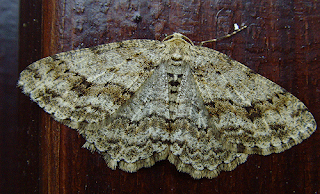


March moth
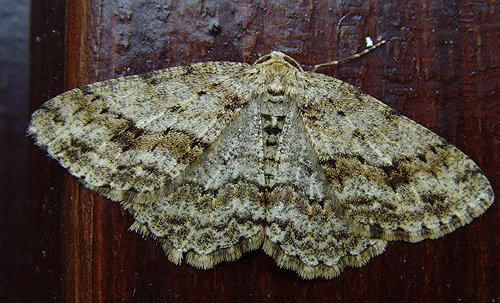
Engrailed

Early moth
A short-eared owl over thwe saltmarsh this afternoon was the only real bird highlight today.
Friday, 11 February 2011
I have had this response about the gull from a man who knows and I am sure he won't mind me putting it here!
'The other bird is a 3rd-w Herring. The white tips to the primaries confirm that it is a 3rd-w and the extent and pattern of brown in the tertials and coverts is typical of Herring and would be extremely unusual in Caspian or Y-l Gull at this age. Basically at this age many Herring Gulls appear about a year behind on their upperpart pattern. So, a Caspian showing this extent of dark in the coverts and tertials would be a 2nd-w (and the brown would tend to be darker and more solid in the tertials and it would show no white primary tips). A 3rd-w Caspian with white in the primary tips would typically appear much more adult like in the upperparts, with any retained dark markings in the tertials still blacker than Herring. ' - Thanks Mr R
Thanks for the response Ben, I am still baffled by large gulls!!
Wednesday, 9 February 2011
Only just got around to sorting out some images hence the late post.
Despite the wind, I decided to got to Blackbrough End tip on Monday to have a look for some gulls. As I arrived, there was a group of mainly large gulls loafing around on the edge of the water. A quick scan through found nothing of note until a few more dropped in. The 2nd scan revealed this corking 1st winter Caspian gull. I managed to get a few shots before a buzzard flushed everything.


After about an hour, they started to dump some new rubbish on the edge of the tip and this attracted back a load of the large gulls that had buggered off earlier. As they settled on the side of the tip, this bird stood out from the crowd. Eventually they were flushed and came down to the water to bathe. In the strong wind and through a fence it wasn't easy to get many shots. The question to anyone out there is...what species is it. I am no expert but it looks different to the herring gulls but I can't seem to make Caspian or yellow-legged fit - can anyone help? 


A fly-over green sandpiper was a surprise for this time of year.
Despite the wind, I decided to got to Blackbrough End tip on Monday to have a look for some gulls. As I arrived, there was a group of mainly large gulls loafing around on the edge of the water. A quick scan through found nothing of note until a few more dropped in. The 2nd scan revealed this corking 1st winter Caspian gull. I managed to get a few shots before a buzzard flushed everything.


After about an hour, they started to dump some new rubbish on the edge of the tip and this attracted back a load of the large gulls that had buggered off earlier. As they settled on the side of the tip, this bird stood out from the crowd. Eventually they were flushed and came down to the water to bathe. In the strong wind and through a fence it wasn't easy to get many shots. The question to anyone out there is...what species is it. I am no expert but it looks different to the herring gulls but I can't seem to make Caspian or yellow-legged fit - can anyone help?
(middle of the flock shot below the black-headed gull)


A fly-over green sandpiper was a surprise for this time of year.
Subscribe to:
Posts (Atom)