Wednesday, 15 March 2017

Roosting waders and spring sunshine

Having had the car checked over at the garage I decided to check the coast between Heacham and Hunstanton for early spring migrants.

Having heard about the recent purple sand at Hunstanton I thought I'd have a good chance of seeing a few waders as the tide was high.
Sadly I'd forgotten how disturbed this part of the coast is and a combination of people and high water meant that there were very few birds about.

I did find a small flock that was rather approachable and allowed good views. I did manage to pick out a few colour ringed turnstones but it was only possible to get a bunch of incomplete combinations. Very nice to get close views and get a few phonescoped shots.

The field on the inland side of the inner seawall on the way back towards Heacham looked very good for an early wheatear but it wasn't to be. Plenty of feeding pipits and wagtails around the horse paddocks and several territorial reed bunting.

The ploughed fields beyond the golf course produced 61 golden plover and 180 curlew. I managed to read 6 colour flag combinations on the curlew before 2 red kites flushed them!

Surprisingly no chiffchaff but a gorgeous in the spring sunshine ☺

Sunday, 12 February 2017

From (nearly) Russia with love

Blimey a blog post, not done one of these for a while!

Making the most of calm conditions and a decent break at Christmas I managed to open my mist nets on several occasions. 

At the end of December there were good numbers of starlings about in the garden and I hoped that we might catch a few. Normally they are very clever and manage to evade the nets but I was catching a few.

Rachael was extracting a bird that was already ringed and assumed to be one of the birds we had caught here in the past so it was quite a shock when she said that it was wearing a Lithuanian ring! The bird was processed, photographed, released and the details were submitted to the BTO.

It was good to get the details back quickly and find out more about the bird.

It was caught on the Baltic Coast, north of Gdansk at the Ventes Ragas Ornithological Station in June 2016 before heading 1361km west and ending up in my garden.

A pretty cool record and my best control (someone else's bird) by a mile.

Wednesday, 15 June 2016

Great Knot!!

Today was 'just another'day' until lunchtime.

Spent the morning dodging the crowds strimming along the west bank path but headed back a bit earlier for lunch as it was getting busier.
I was sat at my desk when Chris Booth rang from the west bank saying he had a great knot on the fresh marsh!!

The phone went down rather quickly and I headed out to find him. When I got to him I was greeted with 'it is one'.

Sure enough, through his scope was a very smart looking summer plumage great knot, I couldn't believe my eyes!

My thoughts then turned to mega bird, lots of people and how do we manage the twitch. Made several calls and got the news out.

It took a little while but people started to arrive but it was never too crazy. Everyone was well behaved and the carpark coped nicely with the increase in visitors.

I managed to get back out in better light and get some really nice views although the piccies aren't great.

What a great find by Chris who has been ploughing though the gulls and waders for months now. Not a bad retirement present for him.

Only the 5th record for the UK and obviously the 1st for Titchwell. My 270th species for the reserve

Sunday, 22 May 2016

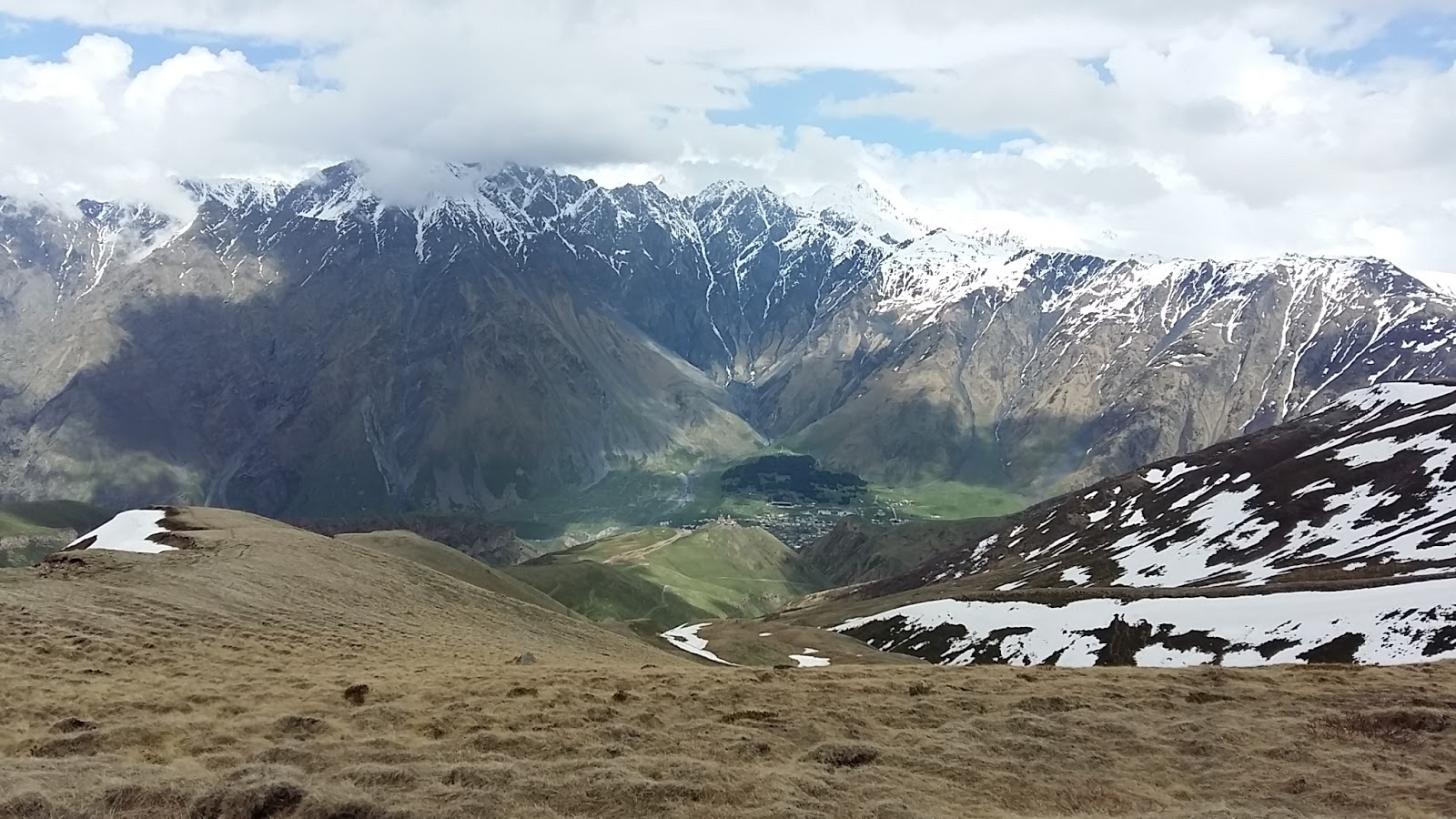
Georgia

Just a few pics to whet your appetite.

Been too tired to post at the end if the day so will probably post some more when I get back.

Highlights so far have been good views of great rosefinch, Caspian snowcocks and Caucasian black grouse. Walk up and views at Kazbegi were amazing.

Sunday, 6 March 2016

Birding the Brecks

I must admit that my trips to the Brecks always seem to be a bit 'hit and miss' in terms on connecting with the target species. Not sure whether it is down to luck or not visiting the right places...?

Decided to head that way today for the first time this year and it proved to be a decent day.

Started of well with a stop on the way to look for goshawks. I was surprised that only one other car was there given that it was the weekend so there was plenty of space to park. It wasn't long before all the woodpigeons were flushing out of the trees and the first male goshawk came into view and started displaying over the woods. I called over to the other birders who got on the bird. Apparently they had been there for over an hour and hadn't seen anything, we'd been there for about 15mins!
Several buzzards were seen displaying (7 in total) along with a male sparrowhawk. After beeing at the site for about 40mins I picked up another goshawk that quickly turned into two birds. A male and female together for 10mins circling around together occasionally joined by one of the buzzards. A great start to the day.

Into the Brecks 'proper' we had a walk around the forest edge at Santon Warren. Probably unsurprisingly the conifer plantations were very quiet with only the odd goldcrest and coal tit calling. The only place there was more life were the deciduous patches along the rides. A walk back along the river was also quiet but we did get good views of a pair of grey wagtails.

Next stop was a new area for me, the back of Grimes Graves. Following the forest tracks we had a pair of woodlark in a recently planted plantation and then a second pair in a sheep grazed area. We looked over Grimes Graves but there was no sign of the great grey shrike from our vantage point. The 3rd goshawk of the day was displaying over the trees in the distance.

Final stop of the day was a search for hawfinches at Lynford. Plenty of goldcrests were singing in the conifers but no firecrests yet, the food put out on the bridge attracted a marsh tit and a nice male reed bunting and siskins were displaying everywhere. We walked to the edge of the paddocks and scanned the big trees. Very little was happening before Sally (and husband) from work bumped into us. They had already walked around the paddocks and not seen anything. While we were chatting I started to hear a 'tick' call coming from the direction of the trees. Sally and I both looked at one of the trees and saw a hawfinch flick up towards the top of the tree. It showed well for a few minutes before moving in to the next tree. It showed better here and through the scope you could see when the bird was calling. After about 5mins, the bird flew across the paddock and into the tall conifers and wasn't seen again.

A good end to a pretty successful day.

Monday, 29 February 2016

Spain - mopping up day

Following the wash out on Saturday, we decided to revisit the sites we didn't manage to do in the rain.

First up was the lake at Estany d' Ivars. Despite not understanding the signs, the lake is a relatively new thing having been created over the last 10 years. It is mainly a large open body of water with a vegetated fringe. At the west end a small area of reeds and sedge held purple swamphen, 3 calling water rails and at least 2 pairs of territorial marsh harriers. At the eastern end is a larger reedbed, probably bigger that at Titchwell. The looked pretty dry and old although a marshy area next to it looked good. It had been horse grazed and was much more open with lots of muddy wet areas. At least 13 snipe came out and bluethroats apparently have been wintering.

We were able round the whole lake today and although there were still the same waterfowl, there were definitely more migrants about. For my sins I counted chiffchaffs (32) and there was an increase in swallows and a load of house martins (30) were new in. Several white stork platforms were in use and despite the cold wind they were bill clapping, nest building and mating.
The surrounding bushes were quiet, probably heaving in another month, but we had great close  views of a couple of firecrests.

We had heard several penduline tits on the walk round and I was determined to see a couple that I had heard at the start of the walk. I could hear them and see the bulrush seed blowing but they took an age to find. In the end we had decent views of the male.

We then revisited the stony plateau in search of sandgrouse again but by the time we got there the wind had picked up significantly making birding tricky. I had a good walk about but the wind was keeping the birds low. I didn't see and sandgrouse, warblers or wheatear but a green sand was on a small flooded area.

On the way back to the main road, Rachael picked up our last new species of the trip, 2 stone curlews sheltering on the edge of a field.

At the end of 4.5 days we ended up with a trip total of 114 species (8 lifers) which I think is pretty good.

We got to see lots of different habitats all a short distance from our base in Lleida. The roads are good and very quiet making travelling very easy. A short return trip in the spring sometime to see the plains alive with larks is definitely on the cards

Sunday, 28 February 2016

Spain - Big Bustards

Today we were out on the dry plains weather Lleida in search of bustards and sandgrouse.

First stop were the large arable fields around the village of Bujaraloz for the great bustards. It didn't take long before we picked up 3 in the roadside fields. A slow drive around the area produced a total of 14, including 7 together, although it was a bit early for them to be displaying yet.

Next stop was a large salt lake. The area used to produce salt but is now derelict. The ruins did produce our first lesser kestrel of the trip and the fields were full of larks. The highlight was a big group of common cranes moving north over the area.
We had a drive round some of the muddy tracks looking for little bustards but with no luck.

A quick stop to look for the great bustards only produced 4 but the light was better showing off their colour well.

We moved back east to spend the afternoon around the Los Monegros. This is a good area for raptors and sandgrouse.
While looking for a good site to watch for raptors we had already seen a couple of ringtail hen harriers and a nice group of 75 feeding chough.

There are tracks all over the plateau so actually finding any birds is a bit of a lottery which made finding our 'own' little bustard special. A little further up the road we picked up 15 pin tailed sandgrouse very close to the car but unfortunately they flushed into the next field before we could stop. As we got to the next field we fussed some more sandgrouse but these were black bellied!! Thankfully they flew a short distance and joined the pin tailed.  17 pin tailed and 15 black bellied together.

We spent a couple of hours at the edge of the plateau looking for raptors. It had been good, 2 golden eagle, griffon vultures and red kites when I picked up what I thought was a booted eagle.

When I saw the bird with one of the golden eagles i realised it wasn't a booted but something bigger and much better. The bird didn't seem to be doing much. It circled around the same area for 10mins before slowly heading east giving great views. I tried hard to get some phonescoped pics but couldn't. The only thing in the book that fitted was Spanish imperial eagle but it seemed too out of range!

We had another look at the little bustard, toured around some more tracks finding a hoopoe and another 11 black bellied sandgrouse before heading back to the hotel.

After an Internet search and a chat with Steve West, I am happy with the id of my eagle. Despite only seeing one in the area in over 20 years, Steve said there has been a small number seen here in the last 10 years. I can't believe I found and identified such a rare bird today.

Most definitely the bird of the trip!