Sunday, 25 August 2013

A weekend of two halves

Although yesterday was good, the birding didn't really match up to the rest of the coast so I hoped for a better day today.

Things didn't start well. I decided that there wasn't really time to go ringing before the WeBS count which soon backfired when I got a call saying they had caught a pied fly!! I missed the last one too.

I was determined to hit the reserve hard but had the count to do first. The fresh marsh has been great for birds in the last few weeks and today was no exception. 20 curlew sand, 5 little stint, green sand, 12 greenshank, 15 spotshank, 12 spoonbill, 350+ golden plover, 200+ dunlin to name a few. The people who keep saying that there is nothing about are either idiots or blind!!

After a quick stop to look for the red necked grebe on the sea (didn't see it), Thornham Point was my base for the rest of the day. The plan of booting through every bit of scrub didn't prove successful with only 1 dunnock, 2 skylark and a handful of pipits. It seemed the Titchwell rarity forcefield was turned up to full power...! A massive female peregrine stooping on a little egret and then chasing a group of wigeon over the saltmarsh was an impressive sight.


Reaching the Point the first decent bird I saw was a lovely little pied fly feeding on the edge of the buckthorn. Could be better but that would do.

A walk around the edge of the dunes produced a cracking redstart and a small brown warbler flushed out of the long grass. After a couple of unsuccessful attempts to get any views I nailed it, my 1st ever migrant grasshopper warbler. All the others I have seen have been singing males.

I then began to notice that birds were beginning to appear, 3 whinchats in the dunes became 5 and another redstart appeared in the buckthorn.

I then noticed a group of birders come into the dunes from the beach. It turned out to be Ashley Saunders. They were looking at the brambles and what I assumed to be the whinchats. As I headed over to see them I noticed a greyish bird on the same brambles. I didn't have my scope with me but I thought it was a wryneck. I shouted to Ashley if it was and sure enough it was. It turned out that they had already seen it at least once! I didn't know that so I'm having it as self found.

Birds were still arriving; 2 wheatear, willow warbler, 2nd pied fly, lesser whitethroat and a spot fly when Ashley shouted Icterine warbler. The bird flicked up into the the top of the buckthorn, showed well for a short period then vanished. A further 5 whinchat on the way back from the point made it a day to remember.

Sueda, bramble and blackthorn scrub at Thornham Point


Saturday, 24 August 2013

"I love my camera"

Was a famous quote from a friend almost every day on our trip to India last year. Well now it is my turn.

Since I have had my new Panasonic TZ9 compact camera I have found a feature that is great for capturing insect photos without getting too close disturbing the subject. The camera has a great 32x zoom that allows you photograph from distance. Once the subject is located, just 2 presses of a button and you are in close. I know that it is digital zoom and the quality is not great but with the powers of photoshop I think the results are perfectly acceptable for blogging. If you need a quick shot to get an ID then it is perfect. I know I am not going to win Wildlife Photographer of the Year but I am pleased.

Grayling butterfly in the garden. One of 2 new species recorded in the garden in recent weeks. The other was a wall brown.


Hoverfly Myathropa florea in the garden. The 1st hoverfly identified using my new fieldguide


Clouded yellow at Titchwell


Common darter


White cheeked pintail at Titchwell


Black tailed godwit at Titchwell


I LOVE MY CAMERA!  
 

Tuesday, 13 August 2013

I've got the blues


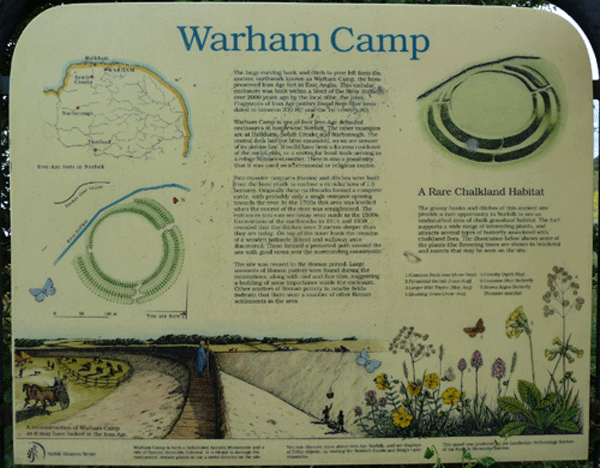
A couple of years ago I heard about a site in North Norfolk that held chalkhill blue butterflies, a species I had never seen before. After seeing messages on Bird Forum and Twitter I visited the site a couple of days ago and wasn't disappointed by what I found. I don't think there was the 6500 individuals that were reported a couple of weeks ago but they were everywhere. sadly they are not getting a bit worn but my new camera worked wonders and I am well happy with the results.

I don't know much about their history in Norfolk but they were introduced to the chalk grassland of the Warham Camp site. I was really nice to walk amongst the clouds of butterflies trying to find the best individuals to photograph. They were a bit flighty due to the wind but I know where I will be visiting again next summer.


Also present was a painted lady and at least one small copper along with loads of whites and meadow browns


Sunday, 11 August 2013

New camera

Since being out on the patch this summer I have been struggling with macro photography of insects and plants with my compact camera so it was time to bite the bullet and get a new one. For once, I actually did some research and decided to stick with Panasonic as a make but go for an updated model.

After a few near misses with Ebay auctions, I finally managed to get a Panasonic DMC-TZ9 for a decent price.

I haven't had time to have much of a play yet as I have only had it a week but I am pleased with the early results.

Painted lady


Peacock


 Rosy rustic


Male orange swift


 Female orange swift


 Ear sp


 Chocolate tip

Friday, 28 June 2013

Kibbutz ringing


Little green bee eater


I had heard about a kibbutz before but didn’t really know what to expect to find but was pleasantly surprised by the place. It was a real oasis in the desert with lots of cover and a real magnet for migrant birds. 

Our main base for ringing was to be the area around the organic garden. This included areas of vegetables that were used on the kibbutz, thick areas of tamarisk around the outside and even the opportunity to put up two-shelf nets around the dung heaps for pipits and wagtails. Our ringing days started with a pre-dawn opening of the nets which we all took turns in doing with the rest of the team arriving at 6am and usually carried on until 11am although strong winds on a couple of days did cause us to close early. After a couple of days, we did erect some nets in the ‘swimming pool’ area to increase our chances.

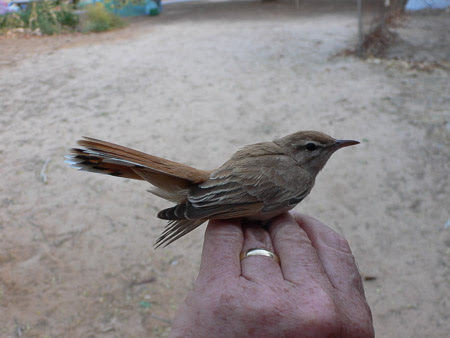
Like everywhere else, the spring had been a bit weird and the migration had been patchy, however on our first morning I struck gold. My first bird ringed of the trip was a blackcap but I was lucky enough to be doing a net round with Gary and Bob when we caught a rufous bush chat! Both of them had done one so I got to ring it. 


Rufous bush chat

I don’t really have space to give a full species list but I will choose some of my highlights.

A bird I have always wanted to see in the hand is a wryneck and to see the amazing display they perform with their necks. I was lucky enough to ring one and extract another. A very close second as the best bird of the trip was hoopoe and I was again fortunate enough to ring one of the three birds we caught.


What a cool bird. You can't believe how much they can twist their heads around. It feels like it could twist off at any time!!


Ageing my wryneck


Hoopoe

Other highlights were extracting a female masked shrike, ringing wood, eastern olivaceous, greatreed and Balkan warblers, red rumped swallow and a male whinchat.

Over the week, we ringed 628 birds of 36 species with the top five species being blackcap (275), house sparrow (104), lesser whitethroat (60), red throated pipit (30) and thrush nightingale (25).

Even when the ringing was quiet, there was plenty to see especially overhead with large numbers of raptors on the move up the valley. Although it was difficult to concentrate fully on the migration, we did attempt to count as much as we could. The main species was steppe buzzard but during the week we recorded also recorded 1 hobby, 11 osprey, 6 marsh harrier, 71 black kite, 9 steppe eagle, 14 short toed eagle, 8 booted eagle, 1 Egyptian vulture, 344 bee eater, 1043 white stork, 129 black stork, 10 red rumped swallow, 1 alpine swift and 2 golden oriole.


It wasn’t just the birds that were fantastic but the whole experience. It was really good to learn from other ringers and trainers and pick up new hints and tips that I have been trying to use back here. I would thoroughly recommend the trip to anyone and would definitely go back again.


Wood warbler


Female masked shrike


Eastern olivaceous warbler


Tree pipit


One of two 1st summer male collared flycatchers we caught


One of our ringing sheets showing all the exciting birds we were catching


Thrush nightingale


Namaqua dove


The locals from the kibbutz were really interested in what we were doing with some of the children returning on several days


Great reed warbler


Spur winged plover


Male red backed shrike

Tuesday, 25 June 2013

Stoned!

Well that was a roller coaster of a day. Started off with a very good garden ringing session, had a middle section of hassle from the general public and ended with an awesome wildlife experience.

With some decent weather, we were finally able to get out and start out annual dune tiger beetle surveying. Warm, sunny and calm days have been in very short supply this summer but it was well worth the wait. Dune tiger beetles are very restricted in their range with East Anglia being one of their strongholds. Being a creature of the strandline and dunes they are very prone to habitat loss following periods of stormy weather. With a fairly calm winter, the dune habitat is looking really good.

We only had time to survey half the beach but can up with some fantastic figures. Surveying is done by slowly walking along the dune edge counting any individuals. Out previous highest count (158 in 2012) was smashed with 265 wee beasties counted!!!

But that wasn't the only highlight...

After seeing to the call of nature in the dunes I sat down to wait for Georgie and Neil to catch me up so I didn't disturb and beetles when I noticed a bird flying by. I raised my bins to see a STONE CURLEW flying over the beach!!! I jumped up and started to shout to the other two as the bird dropped onto the beach further out. The guys go onto it but it again flew, this time closer towards the sea and dropped down again. The haze was so bad that we couldn't actually see it. A radio message went back to the visitor centre but we couldn't relocate again.
It was a notable bird for me as the last one (in 2004) spent the day on the brackish marsh and although it was reported throughout the day, nobody thought to tell the workers. This was made even worse as we had been on the brackish marsh all day and didn't know it was there!!!!! Its is only the 5th reserve record and my 268 species for the reserve.

Time for a beer me thinks

Friday, 21 June 2013

Its all come up rosy

Inspired by my success with the roller I decided to strike while the iron was hot and go and have a look at the Wells rose coloured starling. Well it is only a 15min drive away so it seemed silly not to!

It was well worth the visit and it is a stunning full summer plumage adult showing down to just a few metres. Only my 3rd in the UK following a juv on Scilly and an adult near the Bird Fair a few years ago.

There are lots of better photos out there but with only a 300mm lens I am satisfied with my shots.