Tuesday, 24 September 2013

Buzzzzzzzzzzzzzzzzzzzzzzz

Having spent a lot of my time in the office recently re-writing the reserve management plan, it was nice to get out and spend a whole day on the reserve and actually look at some wildlife. Following some monitoring work carried out on the saltmarsh in 2007 looking for bees, the scarce saltmarsh mining bee Colletes halophilus was located. It has a restricted distribution but is common in East Anglia and found sporadically along the southern coast of England. It is only associated with coastal habitats and is unusual in having a late flight season from mid-August to mid-October and sometimes as late as November.
We wanted to check that it was still present so that further work on its distribution on the reserve could be planned into the next 5yr management plan


The bee is found nesting in holes along the sand dunes and in the old clay seawalls. The bees are very hardy and can even survive in the nests if they are covered by high tides!! The areas where we have found the bees have had suitable nesting areas near large stands of sea aster.


We searched two areas last and were pleased to find adults foraging in both areas. The bees are pretty small and fast so catching them proved a little tricky. Once you get your eye in they are pretty straightforward to identify. Although all the Colletes are similar, the habitat and flight period help separate them from the rest of the family. Their long, thick black antenna and long thin eyes are good features to look for. You have to agree that its a cute looking bee!


We were expecting to find them on the saltmarsh so it came as a bit of a surprise when we found one feeding on a sow thistle on the Autumn Trail. We were actually looking at another species when Rosie went ‘there’s one!’ It showed pretty well and didn’t mind being photographed!


We had a look for Colletes in the dunes on the way but no sign. There were some interesting species including loads of spider-eating wasps. It was fascinating watching them hunting through the marram grass and were even seen to catch a spider.


Now all I need to do is find another excuse to get out of the office...

Sunday, 22 September 2013

Cheeky little twitch

After a disappointing high tide spectacular at Snettisham this morning, thick fog made viewing a nightmare, I decided to head out of the county and have a look at the blue-winged teals near Lincoln.
Typically, the fog cleared just outside King's Lynn and it turned out to be a cracking day (burnt forehead as proof!).

Finding the site wasn't a problem but knowing where to park was a bit more tricky. A quick tweet (I love Twitter!!) and parking instructions were received. I was already parking in Morrisons' so it was just around the corner.

Despite being right on the edge of Lincoln, once you had walked through the back of the retail park, the countryside was surprisingly nice and I was soon seeing a few birds along the drainage ditch running up to the site. Buzzard and yellow wagtail over calling, juv hobby hunting dragonflies along the drain and a fly-by kingfisher.


The site itself was a bit of an oasis. A large reed-fringed lake with scrubby willow woodland around the outside with at least 2 singing chiffchaff and a treecreeper.
Just before I arrived, the birds had moved from in front of the hide to the end of the lake but were showing pretty well. This was only my 2nd record of blue-winged teal following a bird at Chew in 1992!

Back to digiscoping so no prize winning shots here but you get the idea...


I was a little surprised how short the primaries looked on at least one of the birds as if it was in wing moult. I wouldn't have expected juvs that had just crossed the Atlantic to be in moult. Or maybe its my poor knowledge...?

Wednesday, 18 September 2013

Not all bankers are bad....

Over the last few years I have been lucky enough to see the development of a new wetland site along the coast between Titchwell and Holkham. The site at Deepdale Marsh was bought by a private individual who works in the banking sector who had the vision to create a nature reserve. The 200 acre site has been converted from arable into a pretty good wet grassland with an increasing population population of breeding waders. Last year the site held over 60 avocet, 30 lapwing and 20 redshank, has breeding marsh harrier and locally breeding bitterns feed on the site. 3 winters ago, a flock of 50+ Lapland buntings were present in the spring.

Earlier this week I visited the site to have a look at the next phase of work that will improve the site further. One of the issues with the site is that is dries up quickly so the rotary ditcher has been used to install some new footdrains and pools to increase feeding areas for wader chicks.


The ditcher is an American machine that is used to create drainage ditches along roads in the States. Here is is being used in wetland creation. The machine is towed behind a tractor with a large spinning disc at its heart.The machine works to a laser level and automatically adjusts to the differing ground heights to keep the new features level. The spinning wheels has small buckets on it and they remove the excavated material from the new ditch and spreads it thinly by the side. This machine is has many advantages over a conventional 360 digger with the speed of operation being the biggest.

Dry areas of grassland before the ditcher has done its work


The ditches are created by making a number of passes with the machine. Each pass allows the ditch to be made as wide and as deep as required. The machine creates a nice shallow profile and throws the material to one side in a thin layer. This breaks down quickly and vegetation soon recovers.


A bit of rainwater has already started to collect in this new ditch


The machine can also be used to create large shallow scrapes. This requires lots of passes over an area until the desired size and depth is reached.


There are a few existing ditches that are left over from the arable days of the site. Some of the new features have been keyed into this system to ensure thay maintain water in them throughout the year and will probably not dry up during the summer


These features are already looking good after only a couple of days


Its not only man and machine that is creating this new wetland but some of the traditional methods are still going strong. Grazing is an excellent way of managing any grasssland with Highland cattle being used at Deepdale.


A cracking site that should only get better over the next few years.

Thursday, 12 September 2013

I love it when a plan comes together...

 
One of the 'joys' of working on a site that has visitors is that most of them know how to run it better than you. Those years of experience working on their own nature reserve gives them the knowledge base to comment on your reserve management.
Obviously, I am jesting. There is nothing more depressing than spending many many hours devising a management plan and then implementing it for someone to walk down the path and off the cuff say 'the water levels are too high/low' or 'there are no birds here'. WTF do they want!

Despite all this, we still strive to make the reserve the best it can be for birds and this year we have had great success. OK, we may not have the rares of Frampton or Cley but that has as much to do with the lack of birders rather than birds. There are very few people on the reserve after 5 which is great as I have the place virtually to myself but I can't be there every night.
I don't think you can grumble with peaks of 59 curlew sandpiper, 5 little stint, 500+ black tailed godwit, 20 spotted redshank, 16 greenshank, 452 avocet, 420 dunlin, 150 ruff and finally a pec sand in recent days!

The whole idea of the fresh marsh management is to produce ideal conditions for the birds but also to ensure a visitor spectacle and during the autumn, that spectacle is close views of waders. By managing that water levels we can create the perfect feeding conditions in front of the hides and by the paths. Lots of people have said that the birds won't come close to the hides but that is rubbish. These black tailed godwits were feeding in front of Parrinder Hide with at least 30 people in it. The reason they were there is that we had dropped the water levels and they were taking advantage of a new food source.


The great thing about Mother Nature is she gives you a helping hand with your management at this time of year. The water in the fresh marsh during the autumn is very shallow, probably only 50cm deep max, so the weather conditions can have a significant affect on the levels. If we get strong winds, that can push the water around the lagoon creating new areas of mud that may not have been there earlier in the day. This affect opens up new feeding areas and the birds come in.

Areas like this are excellent for waders as the food is easily accessible and the birds give great views.


Curlew sandpipers showing very well from the Island Hide over the last few weeks. It is a bit odd that all the birders and photographers who didn't like the hide when it was built have suddenly been filling it. I wonder why...?

Time to end the rant I suppose, so here are some nice birds which is what its all about ;-)


Sunday, 25 August 2013

A weekend of two halves

Although yesterday was good, the birding didn't really match up to the rest of the coast so I hoped for a better day today.

Things didn't start well. I decided that there wasn't really time to go ringing before the WeBS count which soon backfired when I got a call saying they had caught a pied fly!! I missed the last one too.

I was determined to hit the reserve hard but had the count to do first. The fresh marsh has been great for birds in the last few weeks and today was no exception. 20 curlew sand, 5 little stint, green sand, 12 greenshank, 15 spotshank, 12 spoonbill, 350+ golden plover, 200+ dunlin to name a few. The people who keep saying that there is nothing about are either idiots or blind!!

After a quick stop to look for the red necked grebe on the sea (didn't see it), Thornham Point was my base for the rest of the day. The plan of booting through every bit of scrub didn't prove successful with only 1 dunnock, 2 skylark and a handful of pipits. It seemed the Titchwell rarity forcefield was turned up to full power...! A massive female peregrine stooping on a little egret and then chasing a group of wigeon over the saltmarsh was an impressive sight.


Reaching the Point the first decent bird I saw was a lovely little pied fly feeding on the edge of the buckthorn. Could be better but that would do.

A walk around the edge of the dunes produced a cracking redstart and a small brown warbler flushed out of the long grass. After a couple of unsuccessful attempts to get any views I nailed it, my 1st ever migrant grasshopper warbler. All the others I have seen have been singing males.

I then began to notice that birds were beginning to appear, 3 whinchats in the dunes became 5 and another redstart appeared in the buckthorn.

I then noticed a group of birders come into the dunes from the beach. It turned out to be Ashley Saunders. They were looking at the brambles and what I assumed to be the whinchats. As I headed over to see them I noticed a greyish bird on the same brambles. I didn't have my scope with me but I thought it was a wryneck. I shouted to Ashley if it was and sure enough it was. It turned out that they had already seen it at least once! I didn't know that so I'm having it as self found.

Birds were still arriving; 2 wheatear, willow warbler, 2nd pied fly, lesser whitethroat and a spot fly when Ashley shouted Icterine warbler. The bird flicked up into the the top of the buckthorn, showed well for a short period then vanished. A further 5 whinchat on the way back from the point made it a day to remember.

Sueda, bramble and blackthorn scrub at Thornham Point


Saturday, 24 August 2013

"I love my camera"

Was a famous quote from a friend almost every day on our trip to India last year. Well now it is my turn.

Since I have had my new Panasonic TZ9 compact camera I have found a feature that is great for capturing insect photos without getting too close disturbing the subject. The camera has a great 32x zoom that allows you photograph from distance. Once the subject is located, just 2 presses of a button and you are in close. I know that it is digital zoom and the quality is not great but with the powers of photoshop I think the results are perfectly acceptable for blogging. If you need a quick shot to get an ID then it is perfect. I know I am not going to win Wildlife Photographer of the Year but I am pleased.

Grayling butterfly in the garden. One of 2 new species recorded in the garden in recent weeks. The other was a wall brown.


Hoverfly Myathropa florea in the garden. The 1st hoverfly identified using my new fieldguide


Clouded yellow at Titchwell


Common darter


White cheeked pintail at Titchwell


Black tailed godwit at Titchwell


I LOVE MY CAMERA!  
 

Tuesday, 13 August 2013

I've got the blues


A couple of years ago I heard about a site in North Norfolk that held chalkhill blue butterflies, a species I had never seen before. After seeing messages on Bird Forum and Twitter I visited the site a couple of days ago and wasn't disappointed by what I found. I don't think there was the 6500 individuals that were reported a couple of weeks ago but they were everywhere. sadly they are not getting a bit worn but my new camera worked wonders and I am well happy with the results.

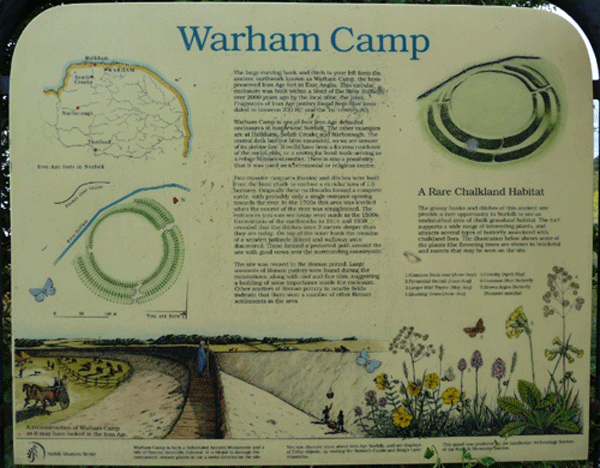
I don't know much about their history in Norfolk but they were introduced to the chalk grassland of the Warham Camp site. I was really nice to walk amongst the clouds of butterflies trying to find the best individuals to photograph. They were a bit flighty due to the wind but I know where I will be visiting again next summer.


Also present was a painted lady and at least one small copper along with loads of whites and meadow browns